
Key Features
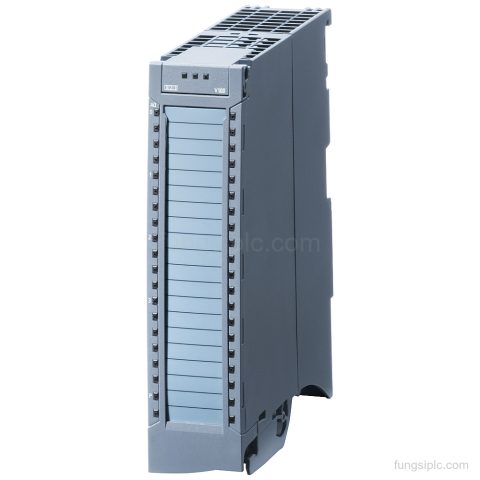
- 4 analog inputs: Analog input module with 4 channels for RTD, thermocouple, voltage, and resistance measurements.
- Channel diagnostics: Provides diagnostics function, diagnostic alarm, and channel-by-channel wire break and overflow/underflow monitoring.
- Selectable measurement support: Supports 2-/3-/4-wire connection and has adjustment of measuring range plus parameterizable smoothing and integration time.
- Conformal coating: Printed circuit board assemblies with conformal coating, Class 2 for high reliability.
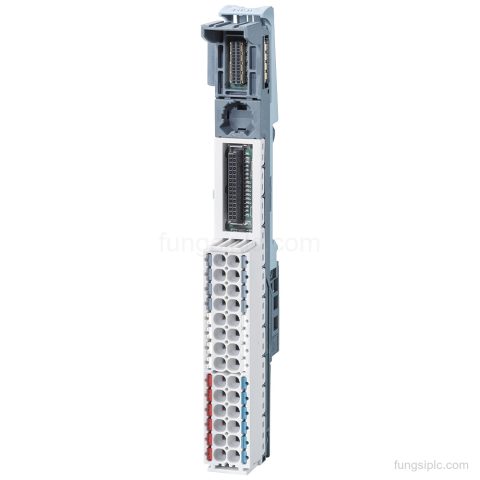
- SIPLUS ET 200SP rail module: Rail-based SIPLUS ET 200SP module suitable for BU type A0 and A1, with color code CC00.
Applications
- RTD and thermocouple signal acquisition: Collects temperature signals from RTD and thermocouple sensors through 4 analog inputs.
- Resistance and voltage signal acquisition: Reads resistance and voltage input signals with selectable measurement ranges and 2-/3-/4-wire connection support.
Technical Summary
| Product type designation | AI 4xRTD/TC 2-/3-/4-wire HF |
|---|---|
| Number of analog inputs | 4 |
| Supply voltage, rated value (DC) | 24 V |
| Supply voltage, permissible range, lower limit (DC) | 19.2 V |
| Supply voltage, permissible range, upper limit (DC) | 28.8 V |
| Current consumption (rated value) | 30 mA |
| Power loss, typ. | 0.75 W |
| Usable BaseUnits | BU type A0, A1 |
| Color code for module-specific color-coded label | CC00 |
| Channel diagnostics | Yes |
Frequently Asked Questions
What is Siemens 6AG2134-6JD00-1CA1 used for?
It is a SIPLUS ET 200SP AI 4xRTD/TC HF analog input module for 2-/3-/4-wire RTD and thermocouple signals.
How many analog inputs does 6AG2134-6JD00-1CA1 have?
It has 4 analog inputs.
What supply voltage does this module require?
The rated supply voltage is 24 V DC, with a permissible range of 19.2 V to 28.8 V DC.
Which BaseUnits are suitable for 6AG2134-6JD00-1CA1?
It is suitable for BU type A0 and A1.
Does 6AG2134-6JD00-1CA1 include diagnostics?
Yes. It includes channel diagnostics, diagnostic alarm, wire break monitoring, and group error monitoring.